
If you have ever wondered what shilajit looks like naturally, the answer is more varied than simply saying it is black. Natural shilajit can range from dark brown to almost black and often has a thick, resinous consistency. Its appearance can change with temperature, moisture, its natural source and the way it has been processed. For anyone researching Pure Shilajit in the UK, knowing these variations can help put product descriptions and photographs into context.
What Does Shilajit Look Like Naturally?
Natural shilajit is a dark, resinous substance associated with mountainous environments. Depending on its source and composition, it may appear dark brown, brown-black or almost completely black.
As a resin, it tends to have a dense, tar-like appearance. When warm, it may look glossy and become sticky or easier to manipulate. In cooler conditions, it can become noticeably firmer and hold its shape more easily.
There is no single appearance that every genuine sample has to match. Differences in composition, moisture, temperature and processing can all affect how shilajit looks and feels. A slightly different shade or consistency does not automatically mean that a sample is genuine or fake.
What Does Raw Shilajit Look Like Before Purification?
Raw shilajit can look quite different from the purified resin sold as a finished product.
Before purification, naturally collected material may contain substances picked up from its surrounding environment. Depending on where and how it was collected, this can include small mineral particles, soil, plant material or other natural debris.
The raw material may therefore look less uniform than a finished resin. It can have an irregular texture or contain visible particles that would not normally be expected in a processed consumer product.
That distinction is important when looking at photographs online. Raw shilajit is a collected natural material, while purified shilajit resin has gone through additional processing. They should not necessarily be expected to look identical.
Is Natural Shilajit Always Black?
No. Black is a common description of shilajit, but natural material can appear in several shades.
It may be dark brown, brown-black or almost black. The colour can vary depending on factors such as its composition, source, moisture and processing.
So, the idea that black shilajit must be authentic is misleading. Colour alone cannot establish whether a product is genuine or pure.
Two samples can also have slightly different colours without that difference proving that one is authentic and the other is not. The same applies to photographs. Lighting, camera settings and the temperature of the resin can all affect how a sample appears on screen.
For consumers, colour is better treated as one small part of the overall picture rather than an authenticity test.
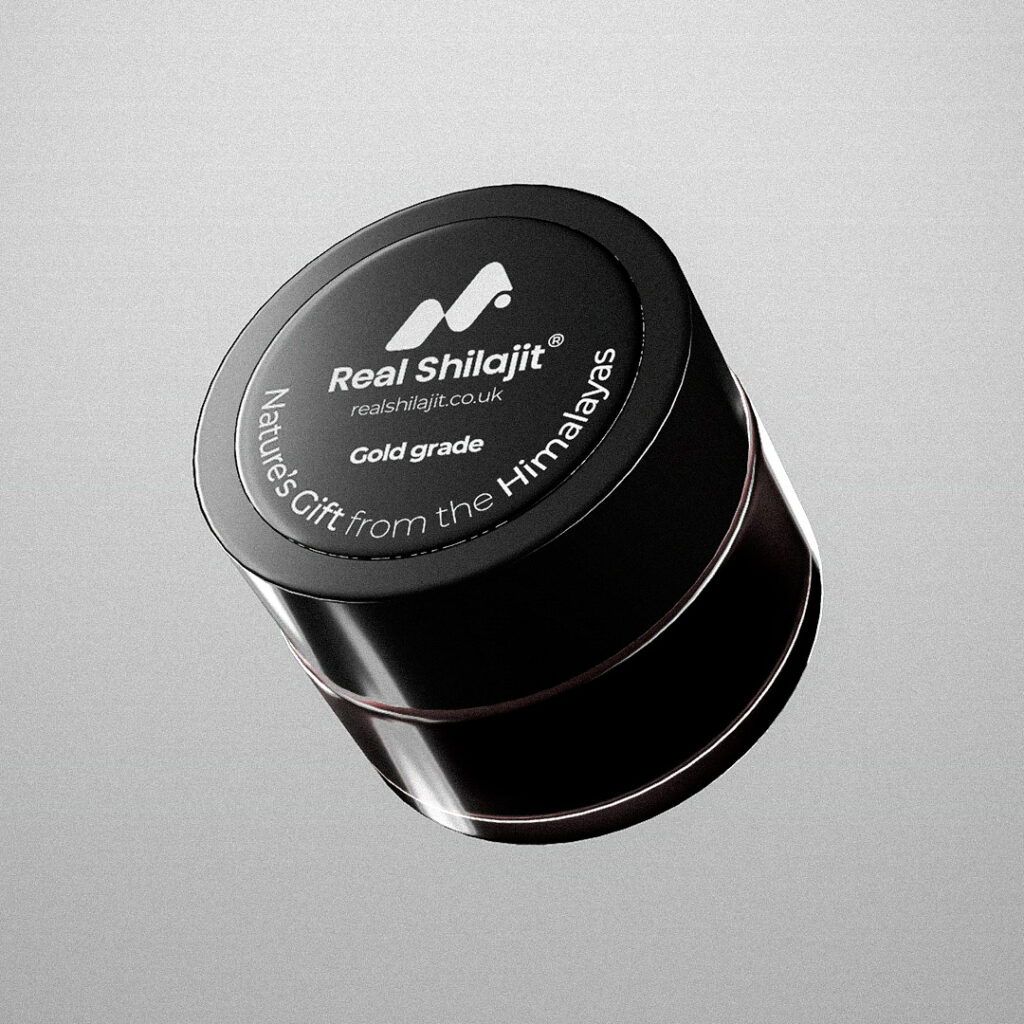
Gold Grade Jar
-
Boosts energy and stamina for intense workouts
-
Supports healthy testosterone levels naturally
-
Enhances muscle recovery and performance
-
Promotes healthy skin and overall vitality
What Texture Should Natural Shilajit Have?
Texture is one of the more noticeable characteristics of shilajit resin. It can be thick, viscous and sticky, particularly when exposed to warmer conditions.
As the temperature changes, so does the consistency. Warm resin may soften and become more adhesive, while colder resin can become much firmer and less pliable.
This explains why the same shilajit can look and feel different at different times. A sample that appears quite solid in a cool room may become noticeably softer after being exposed to warmth.
It is also worth keeping this in context with the separate question of why shilajit turns hard when cold. Firmness in a cooler environment is not, by itself, a useful way to determine whether a product is authentic.
How Does Purified Shilajit Resin Differ in Appearance?
Purification can change both the appearance and consistency of shilajit.
It helps to distinguish between raw shilajit, purified resin and other forms such as capsules or powder. Raw material is collected from its natural environment, whereas purified resin has undergone processing to remove unwanted material.
Because of this, purified resin may appear smoother or more uniform than the raw material. It can still have a dark brown to nearly black colour and can remain sensitive to temperature.
Capsules and powders are different again. They have been processed into another form, so their appearance should not be used as a direct comparison with resin.
A smoother or cleaner-looking resin does not, on its own, prove that the purification process was effective. The appearance of the final product needs to be considered alongside information about its sourcing, processing and testing.
Gold Grade Jar
-
Boosts energy and stamina for intense workouts
-
Supports healthy testosterone levels naturally
-
Enhances muscle recovery and performance
-
Promotes healthy skin and overall vitality
Can You Tell if Shilajit Is Authentic by Looking at It?
Not reliably.
Looking at shilajit can tell you something about its colour, texture and consistency, but those characteristics cannot confirm what the product contains.
When assessing a product, it is worth looking at the information provided by the seller as well as the resin itself. Useful things to check include the stated ingredients, sourcing information, details about processing, packaging and any available laboratory testing.
Testing is particularly important. A product can have the dark colour and sticky texture that people associate with shilajit while still lacking evidence of its purity or authenticity.
Laboratory analysis is therefore much more useful than visual inspection when it comes to assessing composition, purity and possible contamination. Appearance may raise questions or provide useful context, but it is not a substitute for testing.
What Should High-Quality Shilajit Look Like?
There is no universal colour or texture that guarantees high quality.
A properly processed shilajit resin may be dark brown, brown-black or nearly black, with a thick consistency that becomes softer in warmth and firmer in colder conditions. Those characteristics are consistent with the physical nature of resin, but they do not certify its quality.
A better assessment considers the whole product. Clear information about where the material comes from, how it has been processed and whether it has been tested gives consumers more useful information than colour alone.
This matters because visual characteristics can be reproduced. A product can be made to look dark and resinous without its appearance telling you what is actually inside it.
What Does Shilajit Look Like When It Is Warm or Cold?
Temperature can make a noticeable difference to the way shilajit resin looks.
When warm, the resin may soften, become stickier and spread more easily. Its surface can also appear smoother or glossier as it becomes less firm.
In colder conditions, it can become thicker and harder, making it less pliable and more likely to retain its shape.
These changes are part of the reason photographs and descriptions of shilajit can sometimes seem inconsistent. A sample photographed when warm may look considerably different from the same type of resin photographed in a colder environment.
Temperature should therefore be taken into account when comparing the appearance or consistency of different samples.
Conclusion
So, what does shilajit look like naturally? It is generally a dark, resinous substance that can range from dark brown to almost black. Its consistency can change with temperature, becoming softer and stickier in warmth and firmer in colder conditions. Raw material may also contain naturally occurring environmental material that is not present in the finished purified resin.
There is no single colour or texture that can prove a product is authentic. Appearance can provide useful clues, but sourcing information, processing details and credible laboratory testing offer much stronger evidence when evaluating shilajit.
Gold Grade Jar
-
Boosts energy and stamina for intense workouts
-
Supports healthy testosterone levels naturally
-
Enhances muscle recovery and performance
-
Promotes healthy skin and overall vitality